
Knife Sharpeners Guide
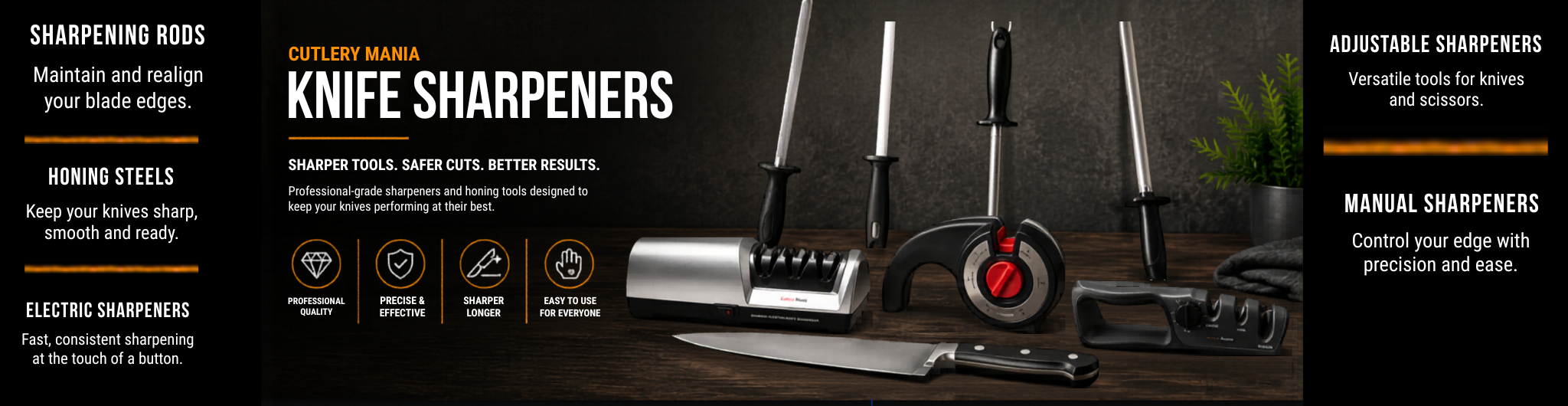
Knife Sharpeners Guide — Sharpening vs Honing, and How to Choose the Right Tool
Keeping knives sharp is one of the most important and most overlooked practices in any butcher shop, commercial kitchen, or home food prep environment. A dull knife requires more force to cut, which increases fatigue, reduces precision, and significantly raises the risk of the blade slipping. This guide covers every knife sharpening and honing tool in the CutleryMania lineup — electric sharpeners, pull-through systems, honing steels, and diamond rods — explaining what each one does, when to use it, and how to choose the right combination for your operation.
Electric 3-Stage Knife Sharpener — Fastest Full Sharpening System
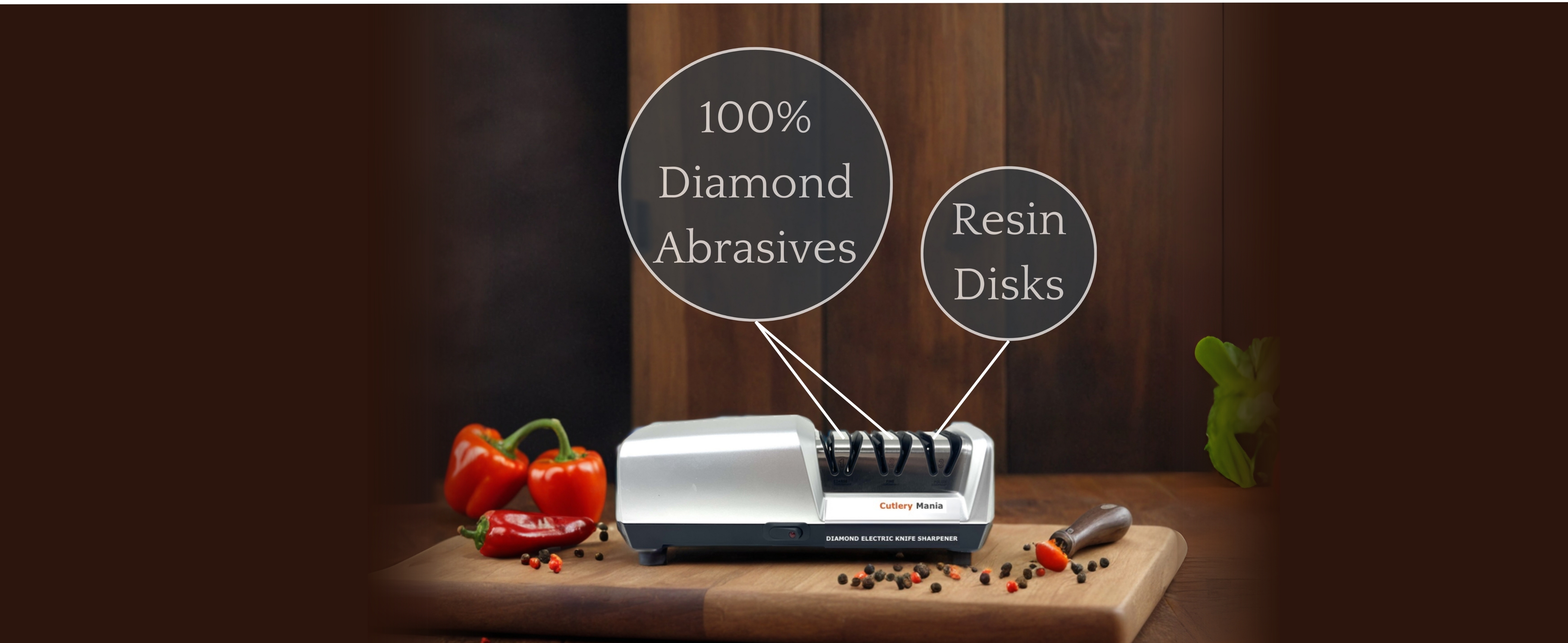
The electric 3-stage knife sharpener is the fastest and most consistent sharpening system available for commercial and high-use kitchen environments. It uses a three-stage progression — coarse diamond, fine diamond, and resin polish — to take a dull or damaged blade from rough restoration through to a finished razor-sharp edge in a single pass. The motorized abrasive wheels do the work automatically, maintaining a consistent sharpening angle without requiring the operator to control the blade manually, which makes it both faster and more consistent than manual sharpening methods.
Stage 1 uses coarse diamond abrasive to repair damaged or very dull edges and reset the blade geometry. Stage 2 uses fine diamond to refine the edge and remove the burr left by stage 1. Stage 3 uses a resin polishing wheel to hone and polish the finished edge to a razor-sharp cutting surface. The entire process takes under a minute per knife, making it the most practical sharpening option for butcher shops and commercial kitchens that maintain multiple knives in rotation.
The electric sharpener is the right choice for operations that need fast, reliable, repeatable results without requiring technical sharpening skill from the operator. It is especially valuable in environments where multiple knives need to be sharpened at once — a busy butcher shop preparing for a full processing day, for example.
6-in-1 Pull-Through Knife & Scissor Sharpener — Most Versatile Manual Option
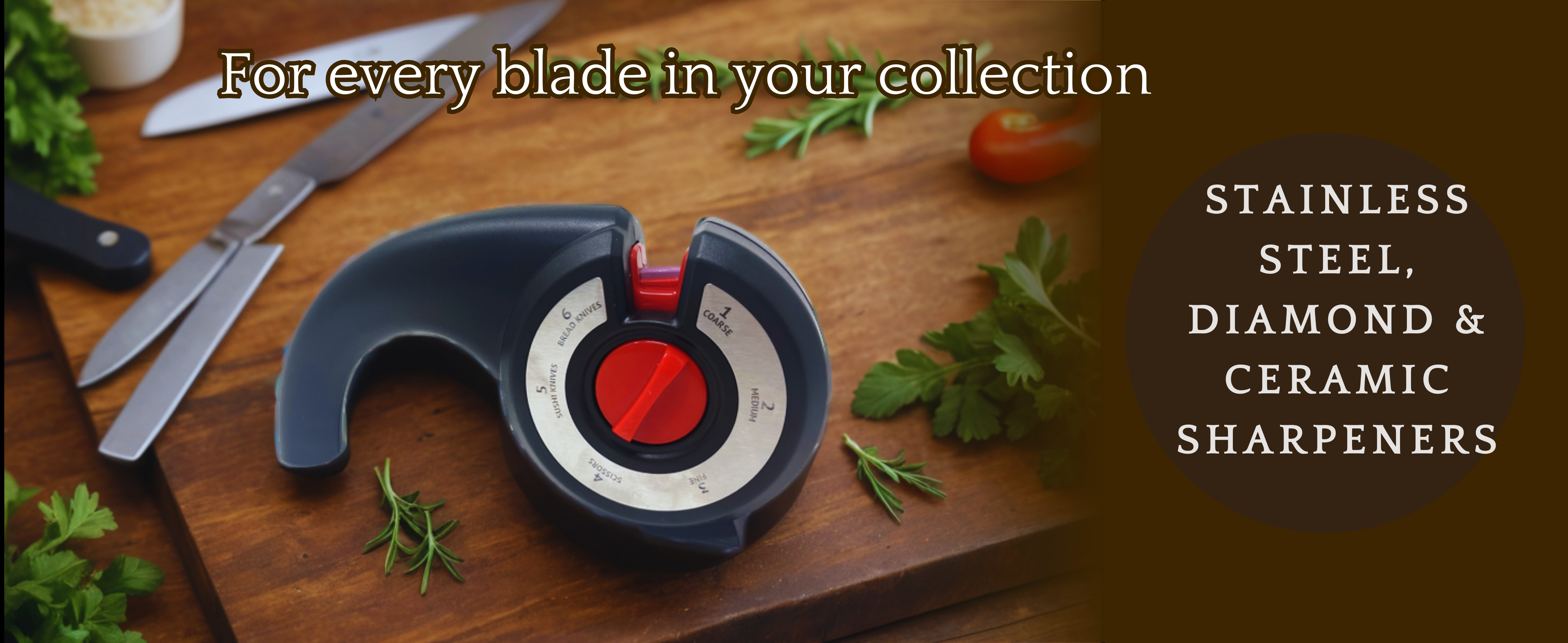
The 6-in-1 pull-through sharpener is the most versatile manual sharpening tool in the CutleryMania lineup. It includes coarse, medium, and fine sharpening stages using stainless steel, diamond, and ceramic elements, plus dedicated slots for scissors, sushi knives, and serrated bread knives. This makes it a practical all-in-one solution for home kitchens, small restaurants, and operations that need to sharpen a variety of blade types without multiple dedicated tools.
Pull-through operation is simple — draw the blade through the appropriate slot from heel to tip using light, consistent pressure, repeating until the edge is restored. The fixed-angle design means the sharpening angle is set automatically, which makes it easy to use without sharpening experience. For scissors, a dedicated slot allows the blades to be sharpened individually without disassembly.
The 6-in-1 is the right choice for home cooks, small restaurant kitchens, and operations that need a single compact tool to cover the full range of common kitchen blades. For high-volume commercial use where speed and consistency are the priority, the electric 3-stage sharpener is the stronger choice.
Adjustable Angle Pull-Through Sharpener (24°–48°) — Most Control Over Edge Geometry
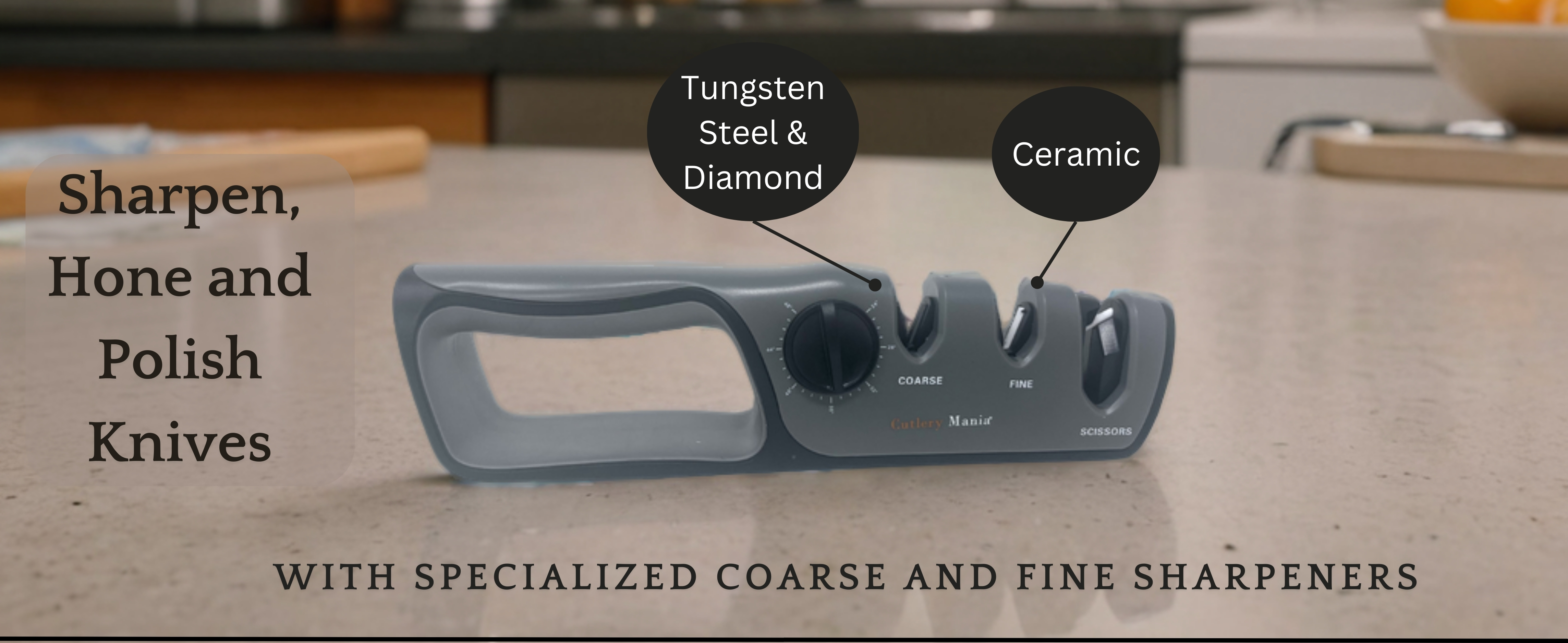
The adjustable angle pull-through sharpener offers more control over the sharpening process than standard fixed-angle systems. An adjustable dial lets the user set the sharpening angle anywhere from 24 to 48 degrees, which allows the sharpener to be matched to the factory angle of different knife types. Western kitchen knives are typically sharpened at 20–25 degrees, heavier butcher and breaking knives may use angles up to 30 degrees, and some Asian-style knives use angles as low as 15–17 degrees. Being able to match the original angle preserves the blade geometry and produces a cleaner, longer-lasting edge than sharpening at a mismatched angle.
The coarse stage uses tungsten carbide and diamond elements for edge repair and requires 3–6 pull-through strokes to restore a dull blade. The fine ceramic stage refines and polishes the edge in 1–3 strokes. The sharpener also includes a scissor sharpening function. This tool is the right choice for professional kitchens and butchers who maintain a mixed collection of knife types with different factory angles, and who want more precision than a standard pull-through provides.
30 cm Chrome-Coated Round Honing Steel — Professional Daily Maintenance
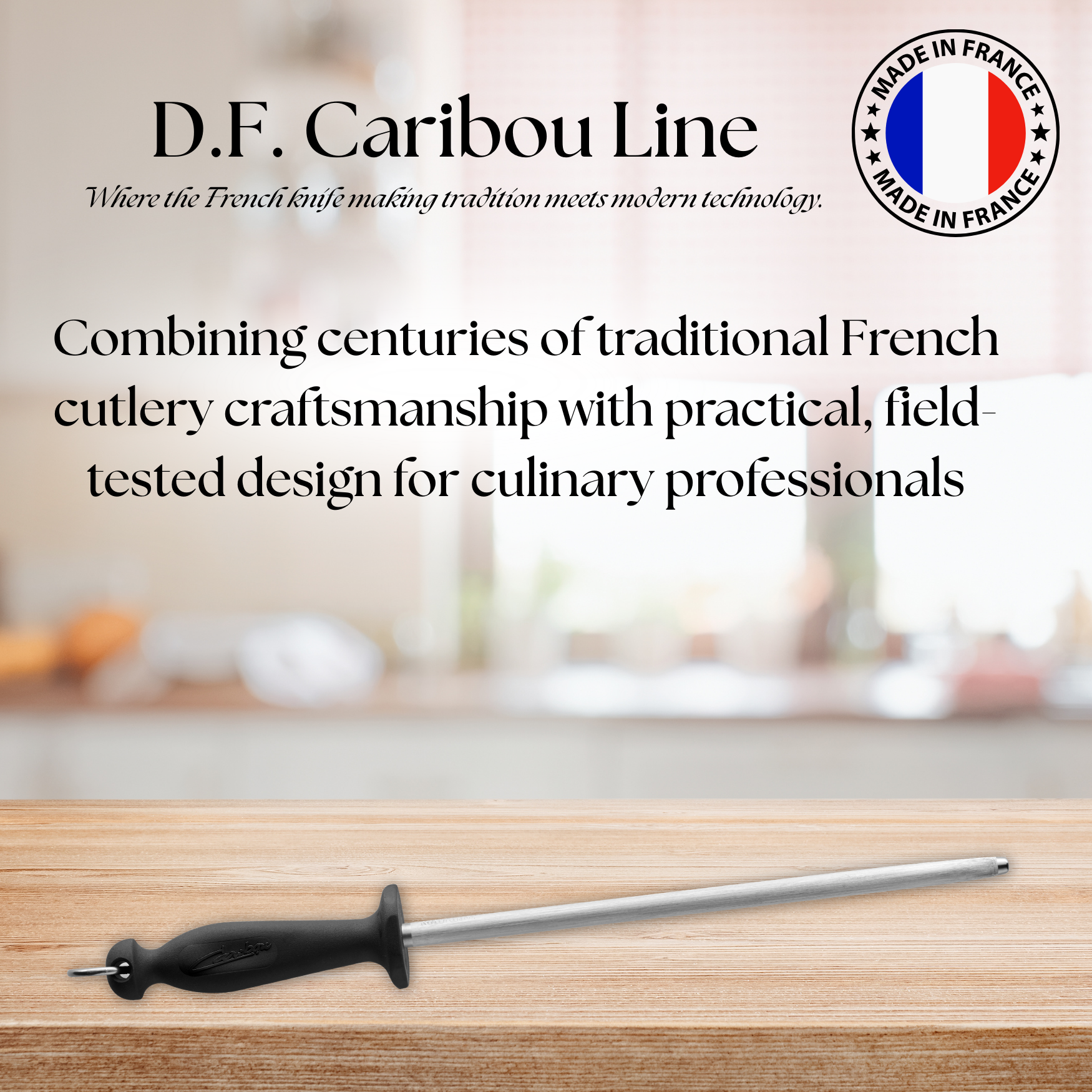
The 30 cm (12 inch) chrome-coated round honing steel from the D.F. Caribou line is a professional-grade daily maintenance tool built for intensive commercial use. Constructed from 115CrV3 stainless steel with a hardness rating of 65 HRC — significantly harder than the knife blades it services — the hard chrome coating provides a durable, smooth honing surface that quickly realigns the blade edge without removing excessive steel. The ergonomic TPE handle includes a hanging ring for convenient storage at the workstation.
This honing steel is designed for butcher shops and commercial kitchens that need a reliable, long-lasting tool for daily and multi-shift knife maintenance. At 65 HRC hardness, it is hard enough to maintain its surface integrity through years of heavy professional use without wearing down or losing its honing effectiveness. Use it before each cutting session or whenever a knife begins to feel less responsive to maintain peak cutting performance throughout the work day.
Giesser Primeline Honing Steel (31 cm) — Fine Edge Maintenance for Premium Knives
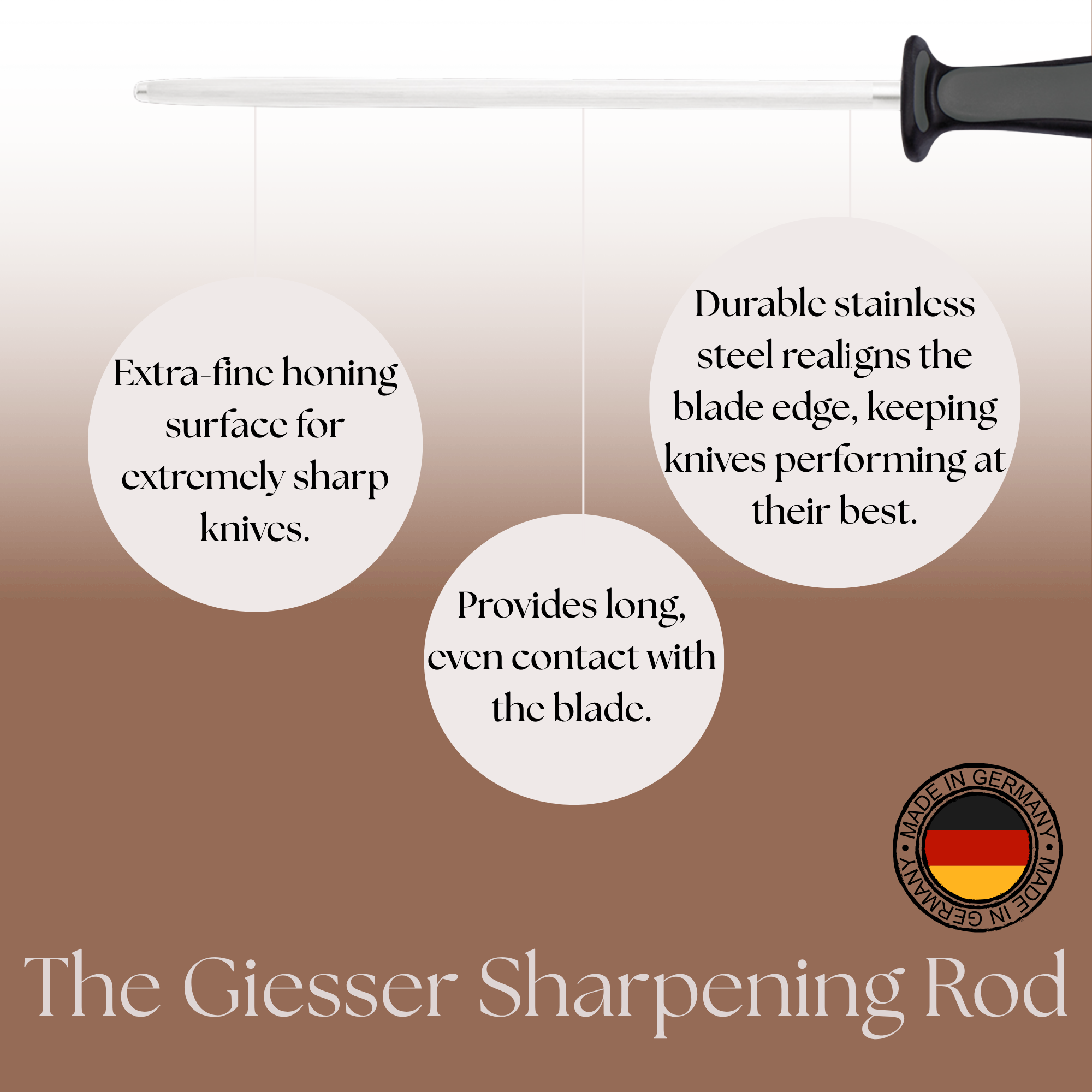
The Giesser Primeline honing steel is a 31 cm (approximately 12 inch) extra-fine honing rod made in Germany, designed specifically for precision edge maintenance on high-quality professional knives. The extra-fine coated surface produces a finer, smoother honing action than standard honing steels, which makes it the preferred tool for chefs and butchers who use premium knives and want to maintain the sharpest possible working edge without removing more steel than necessary.
The ergonomic 2-component non-slip handle provides secure grip even in wet conditions, consistent with the Giesser Primeline standard for professional commercial use. For operations using Giesser Primeline or D.F. Caribou knives, pairing them with the Giesser honing steel ensures the maintenance tool is matched in quality to the knives it services. For operations using standard commercial knives in high-volume environments, the chrome-coated D.F. Caribou honing steel is the more practical choice.
Butcher's Honing Steels (12" & 14") — Everyday Commercial Edge Maintenance
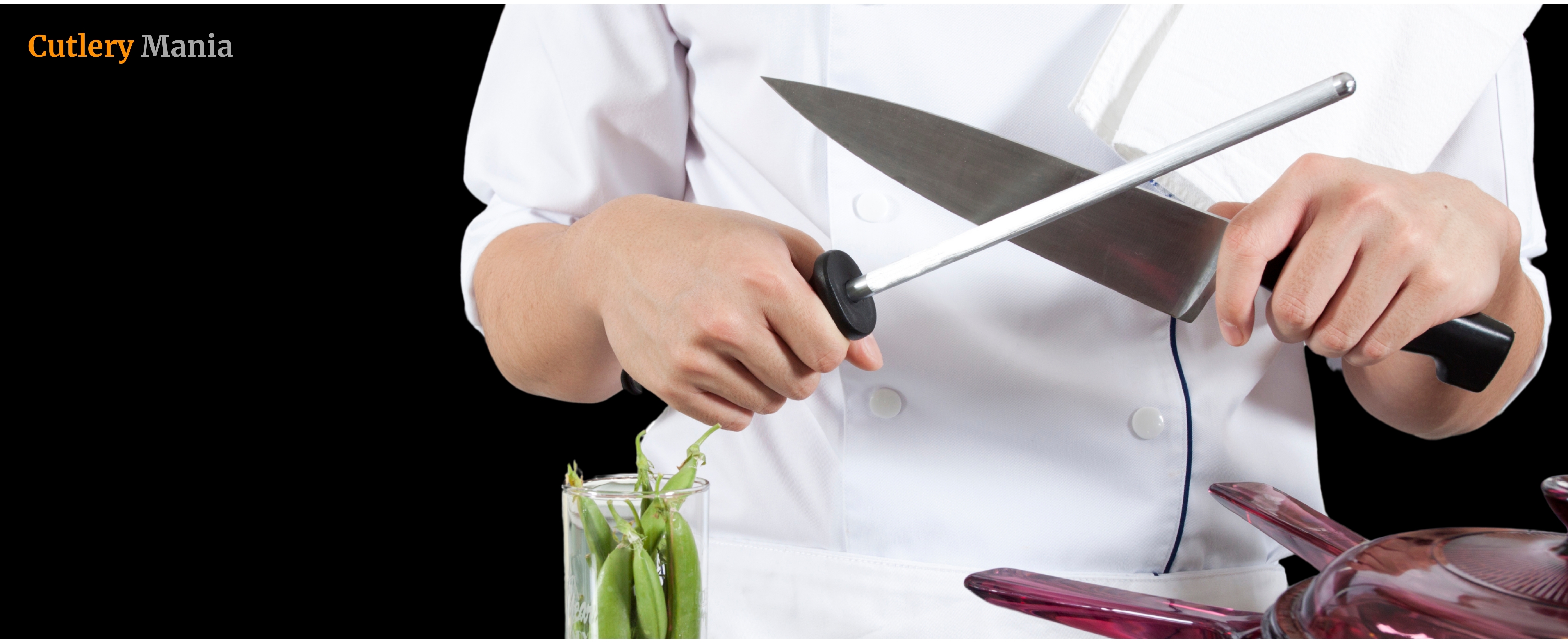
The butcher's honing steel is the essential daily maintenance tool in any commercial butcher shop or kitchen. Available in 12 inch and 14 inch lengths, these round honing steels are designed for the quick, repeated honing strokes that keep cutting edges aligned and performing throughout a full work day. A butcher who hones their knife every 15–20 minutes during active cutting will find the knife stays sharper longer and requires full sharpening much less frequently — which extends blade life and reduces the total cost of knife ownership over time.
The 12 inch honing steel is the more commonly used length — it offers good control and is easy to handle during honing without requiring a large sweep of the arm. The 14 inch steel is better suited for longer blades like breaking knives and slicers, and for butchers who prefer faster, longer honing strokes during high-volume processing. Both sizes perform the same function and the choice comes down to the blade length being maintained and personal preference.
12" Diamond Coated Sharpening Rod — Fast Mid-Shift Edge Restoration
A diamond coated sharpening rod sits between a honing steel and a full sharpener in terms of aggressiveness. The diamond abrasive surface removes a small amount of steel with each stroke — more than a honing steel but significantly less than a full sharpening session. This makes it the right tool for mid-shift edge restoration when a knife has gone dull during use and needs more than honing can provide, but a full sharpening session is not practical or necessary.
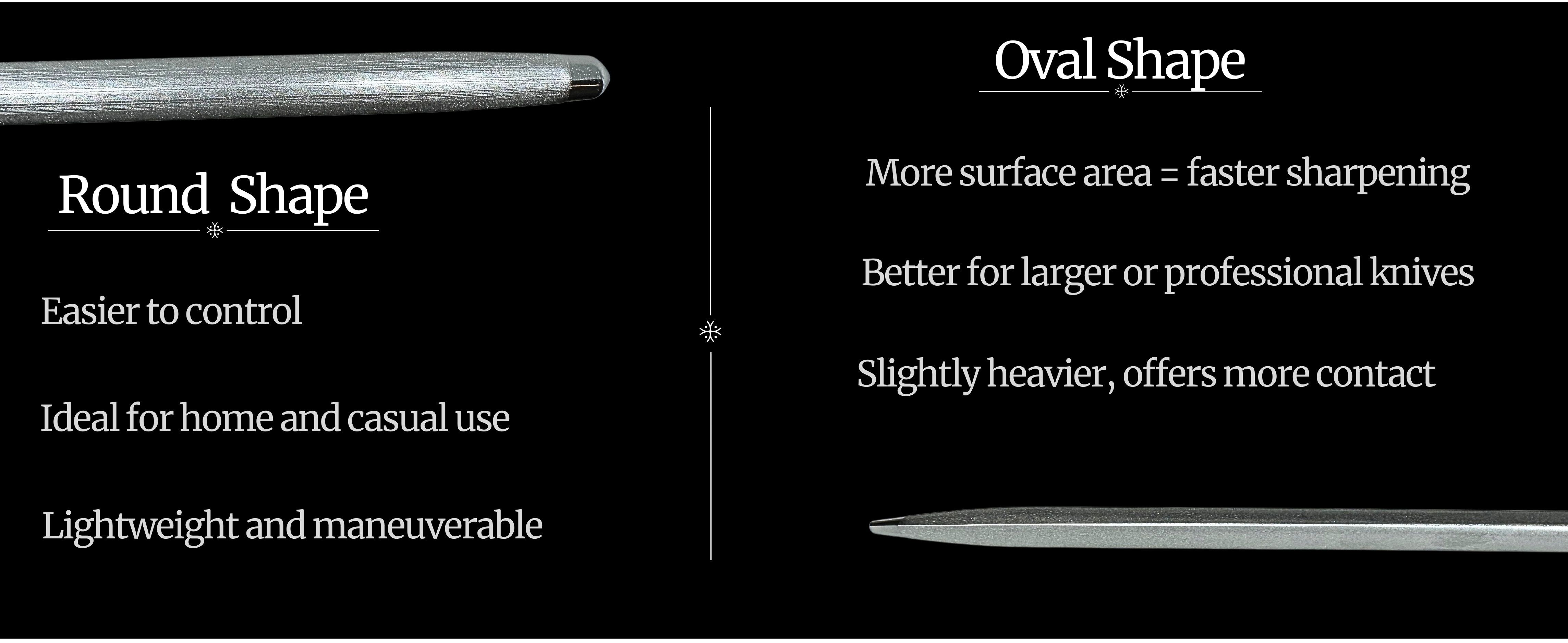
Diamond rods are particularly effective on harder, higher-quality knife steels that standard honing steels cannot bite into effectively. They are available in round and oval profiles — a round rod gives more control and precision for detailed edge work, while an oval rod provides more surface contact per stroke and restores dull edges faster. For butcher shops and high-volume kitchens, a diamond rod kept at the workstation allows quick edge restoration without interrupting workflow to use the electric sharpener.
Quick Knife Sharpening Tool Selection Guide
| Situation | Recommended Tool |
|---|---|
| Fastest full sharpening — multiple knives | Electric 3-stage sharpener |
| All-in-one home or small kitchen sharpener | 6-in-1 pull-through sharpener |
| Precision sharpening at specific angle | Adjustable angle sharpener (24-48 degrees) |
| Daily maintenance — commercial butcher shop | 30cm chrome honing steel or butcher's honing steel |
| Daily maintenance — premium knives | Giesser Primeline 31cm honing steel |
| Mid-shift edge restoration without full sharpening | 12" diamond coated sharpening rod |
| Long blades — breaking knives, slicers | 14" butcher's honing steel |
Frequently Asked Questions — Knife Sharpeners
What is the difference between sharpening and honing a knife?
Sharpening removes steel from the blade to create a new cutting edge. It is used when a knife has become genuinely dull and honing no longer restores cutting performance. Honing realigns the existing edge without removing significant steel — it straightens the microscopic teeth along the edge that bend out of alignment with regular use. Hone frequently (before each use or multiple times per shift in commercial environments) and sharpen only when honing is no longer effective.
What is the best knife sharpener for a butcher shop?
For commercial butcher shops, the electric 3-stage sharpener is the most efficient option for full sharpening — it is fast, consistent, and requires no technical sharpening skill. For daily maintenance between sharpening sessions, a butcher's honing steel or chrome-coated honing steel is used before and during each work session. For mid-shift edge restoration, a diamond sharpening rod quickly restores a dull edge without a full sharpening session.
How often should knives be honed in a commercial kitchen or butcher shop?
In professional butcher shops and commercial kitchens, knives should be honed before each use and again whenever the blade begins to feel less responsive during cutting — typically every 15–30 minutes of active use in high-volume environments. Frequent honing keeps the edge aligned and significantly extends the time between full sharpening sessions, which reduces wear on the blade over time.
What angle should kitchen and butcher knives be sharpened at?
Most Western kitchen knives are sharpened at 20–25 degrees per side. Heavier butcher and breaking knives may use angles closer to 25–30 degrees for added durability. Asian-style knives like Santoku knives are often sharpened at 15–17 degrees for a finer, more acute edge. The adjustable angle pull-through sharpener lets you match the factory angle of any knife type within the 24–48 degree range.
Can honing steels sharpen a knife?
Honing steels primarily realign the existing edge rather than removing significant steel. For a knife that is mildly dull from regular use, honing may restore enough sharpness to continue working effectively. For a genuinely dull knife where the edge itself is worn down rather than just misaligned, a sharpener or diamond rod is needed to restore the cutting edge. If honing no longer improves the knife's cutting performance, it is time to sharpen.
What is the advantage of a diamond coated sharpening rod over a regular honing steel?
A diamond coated rod is more aggressive than a standard honing steel because the diamond abrasive surface removes a small amount of steel with each stroke, allowing it to restore genuinely dull edges rather than just realigning them. Diamond rods are also effective on harder, higher-quality steels that standard honing steels cannot grip effectively. They are the right tool when a knife needs more than honing but does not require the full three-stage treatment of an electric sharpener.
Are pull-through sharpeners safe for professional kitchen knives?
Yes — quality pull-through sharpeners are safe for most professional kitchen knives when used correctly. The main consideration is that pull-through sharpeners use a fixed angle, so they may not perfectly match the factory edge angle of every knife. For operations where matching the exact factory angle matters, the adjustable angle sharpener is the better option. Pull-through sharpeners are not recommended for Japanese single-bevel knives or very thin Asian-style blades that require specialized sharpening angles.
Which honing steel size should I choose — 12 inch or 14 inch?
A 12 inch honing steel provides more control and easier handling for most knives and is the right choice for general butcher shop and kitchen use. A 14 inch steel is better for longer blades like breaking knives and slicers, and for butchers who prefer faster, longer honing strokes during high-volume processing. If you primarily use standard 6–10 inch knives, the 12 inch is the more practical choice.
What is the best way to maintain kitchen scissors?
The 6-in-1 pull-through sharpener and the adjustable angle sharpener both include dedicated scissor sharpening slots that allow kitchen shears to be sharpened without disassembly. Draw each blade individually through the scissor slot for a clean, even edge restoration.
Shop Knife Sharpeners & Honing Steels
CutleryMania carries a full range of knife sharpening and honing tools for commercial butcher shops, professional kitchens, and home use.
- Electric 3-Stage Knife Sharpener — Fastest full sharpening system for commercial use
- 6-in-1 Pull-Through Knife & Scissor Sharpener — Versatile all-in-one for home and small kitchens
- Adjustable Angle Pull-Through Sharpener — Precision sharpening at 24-48 degrees
- 30cm Chrome-Coated Honing Steel — D.F. Caribou professional daily maintenance rod
- Giesser Primeline 31cm Honing Steel — Extra-fine German honing rod for premium knives
- Butcher's Honing Steels (12" & 14") — Everyday commercial edge maintenance
- 12" Diamond Coated Sharpening Rod — Fast mid-shift edge restoration
Questions about which sharpening tool is right for your knives or operation? Call or text CutleryMania at (973) 287-6535 or email sales@cutlerymania.com. We respond within one hour during business hours.
There are no products listed under this category.