
Butcher Supplies Guide
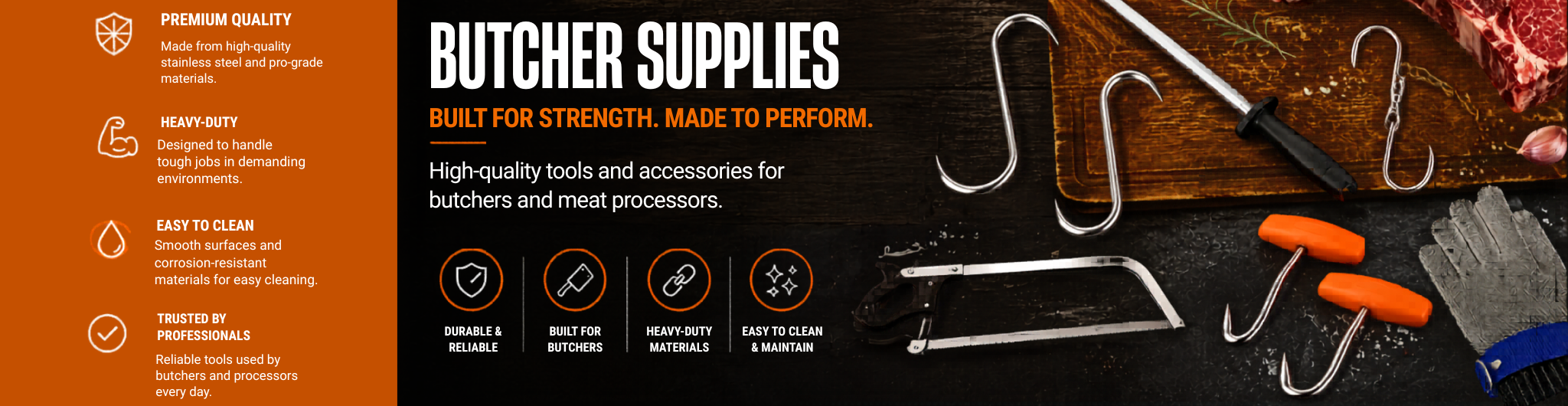
Butcher Supplies Guide — Hand Saws, Meat Hooks, Safety Gloves & More
This guide covers the essential butcher supplies used in commercial butcher shops, meat processing facilities, and professional kitchens — hand meat saws, meat hooks, cut-resistant gloves, bench scrapers, bone dusters, and sharpening tools. Each section explains what the tool is designed for, when to choose it, and how it fits into a real meat processing workflow. Whether you are setting up a new butcher shop, replacing worn equipment, or looking for the right safety gear for your operation, this guide gives you the information to make the right choice.
Hand Meat Saws — Manual Bone Cutting for Butcher Shops
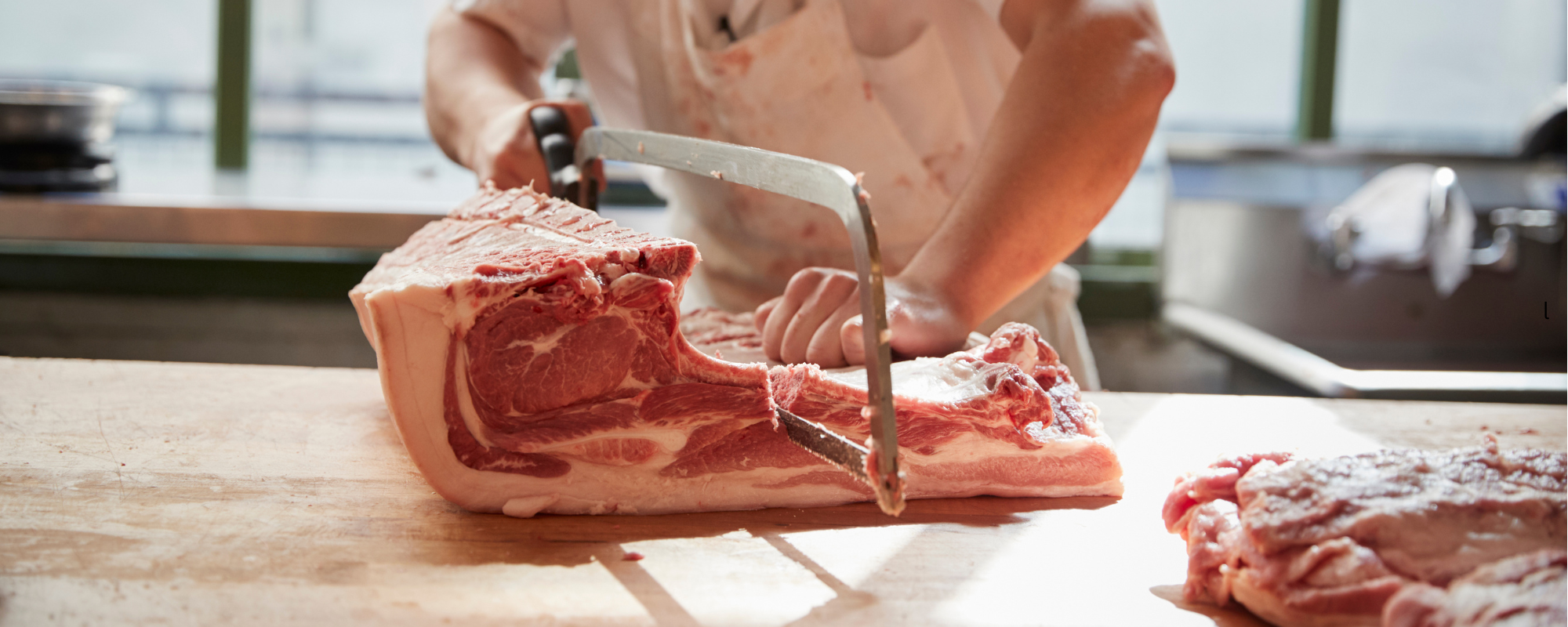
A hand meat saw is a manually operated saw used to cut through bone and divide large meat sections into smaller retail cuts. It is one of the most fundamental tools in any butcher shop — used for breaking down primals, portioning bone-in cuts, and handling tasks where a band saw or reciprocating saw is not available or practical. Hand saws are available in two standard lengths — 19 inches and 25 inches — each suited to different carcass sizes and cutting demands.
19" Hand Meat Saw — Standard Butcher Shop Use
The 19 inch hand meat saw is the standard choice for retail butcher shops and general commercial meat cutting. The shorter blade provides better control and maneuverability during cutting, produces less operator fatigue during extended use, and is well-suited for pork, beef, and lamb cuts at the primal and sub-primal level. For a butcher shop that handles moderate daily cutting volumes across a variety of cut sizes, the 19 inch saw is the practical everyday tool.
25" Hand Meat Saw — Large Carcasses and Heavy Bone Cutting
The 25 inch hand meat saw is designed for larger carcasses, heavy bone cutting, and high-volume or industrial processing environments where the longer blade stroke produces faster, more efficient cuts through thick bone sections. It is the right choice for slaughterhouse processing, large beef quarter breakdown, and any application where the 19 inch blade lacks the reach or cutting speed needed for the product being processed. The longer blade also reduces the number of strokes required per cut, which matters in high-throughput environments where cumulative cutting effort adds up significantly over a shift.
Hand Saw Refill Blades — 12 Pack
Hand saw blades dull with regular use and should be replaced when cutting becomes slower, rougher, or requires noticeably more force than usual. A dull blade increases operator fatigue and produces rougher cut surfaces that reduce product presentation quality. The 12-pack refill supply ensures replacement blades are always on hand to maintain consistent cutting performance without interrupting production. Keeping spare blades stocked is standard practice in any busy commercial butcher shop.
Meat Hooks — Hanging, Handling & Processing
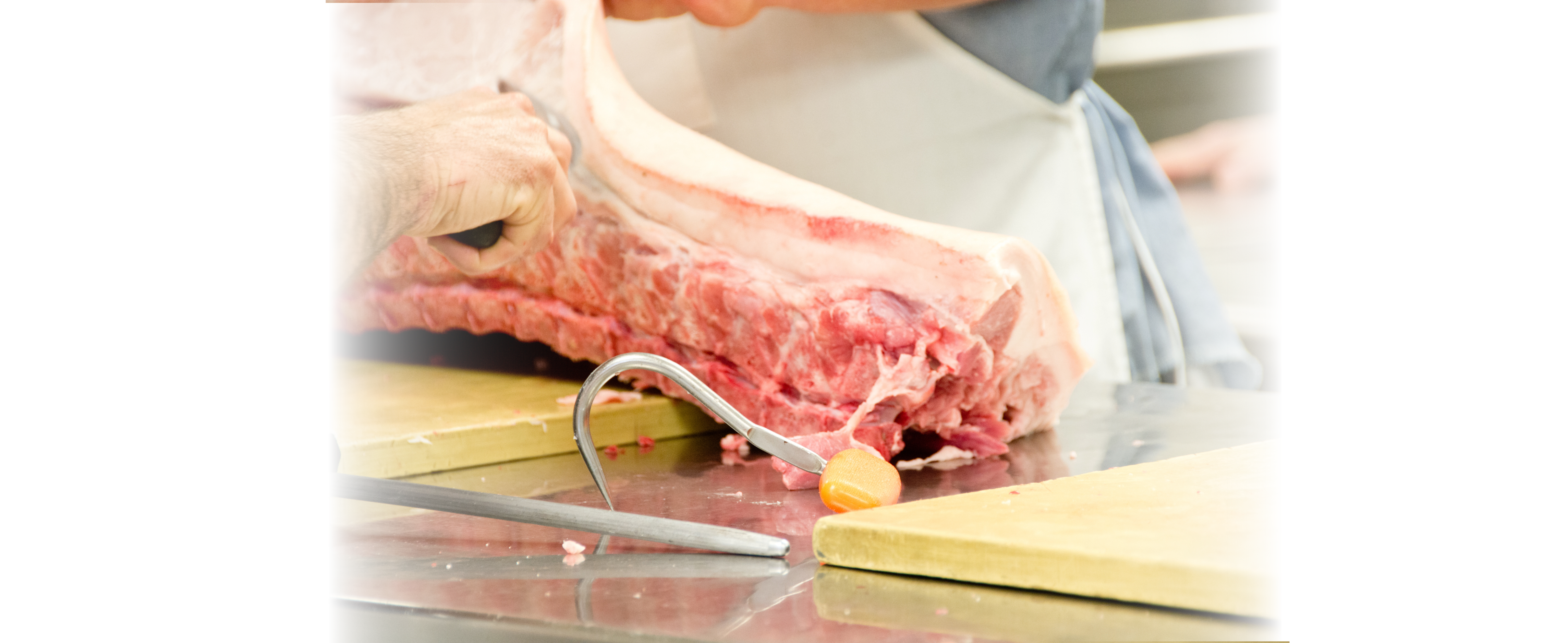
Meat hooks are used throughout the butcher shop and processing facility for hanging, moving, and positioning meat during storage, processing, and cutting. Different hook styles serve different purposes — S hooks are used for rail hanging and storage, hinged double hooks are designed for heavy carcass loads, and T-shaped handling hooks are used to grip and maneuver meat safely during cutting. Choosing the right hook for the application improves safety, reduces product damage, and makes the work more efficient.
S Hook — 4 Pack
S hooks are the standard hanging tool for walk-in coolers, drying rooms, aging areas, and smokehouse racks. The S-shape allows the hook to be placed over a rail or rod at one end and hold a piece of meat at the other, making them the simplest and most versatile solution for hanging and storing meat at any stage of processing or aging. S hooks are available in stainless steel for rust resistance and food-safe use in wet and cold environments.
Hinged Double Meat Hook — 4 Pack
The hinged double meat hook is a heavy-duty hanging tool designed for large carcasses and high-load processing line applications. The double hook design provides two anchor points rather than one, which distributes weight more evenly and prevents the hook from rolling or slipping under the weight of a heavy carcass. The hinged central joint allows the hook to flex and balance on uneven or irregular loads, making it particularly effective for hanging whole beef quarters and large pork carcasses. This is the right hook for slaughter floor and rail operations where load stability is critical.
T-Shaped Meat Hook with Orange Handle — 2 Pack
The T-shaped meat hook is a handling hook designed to be held in the hand during cutting and processing — not for hanging. The T-handle provides a secure, ergonomic grip that allows the butcher to grip, pull, and position large cuts of meat safely while keeping the other hand free for knife work. This style of hook reduces the need to touch the meat directly with an unprotected hand during cutting, which improves both safety and hygiene. The bright orange food-grade handle provides high visibility in a busy processing environment and a non-slip grip during wet or demanding cutting tasks. Available in 4-inch and 5-inch hook lengths.
Cut-Resistant Gloves — Hand Protection for Butcher Work
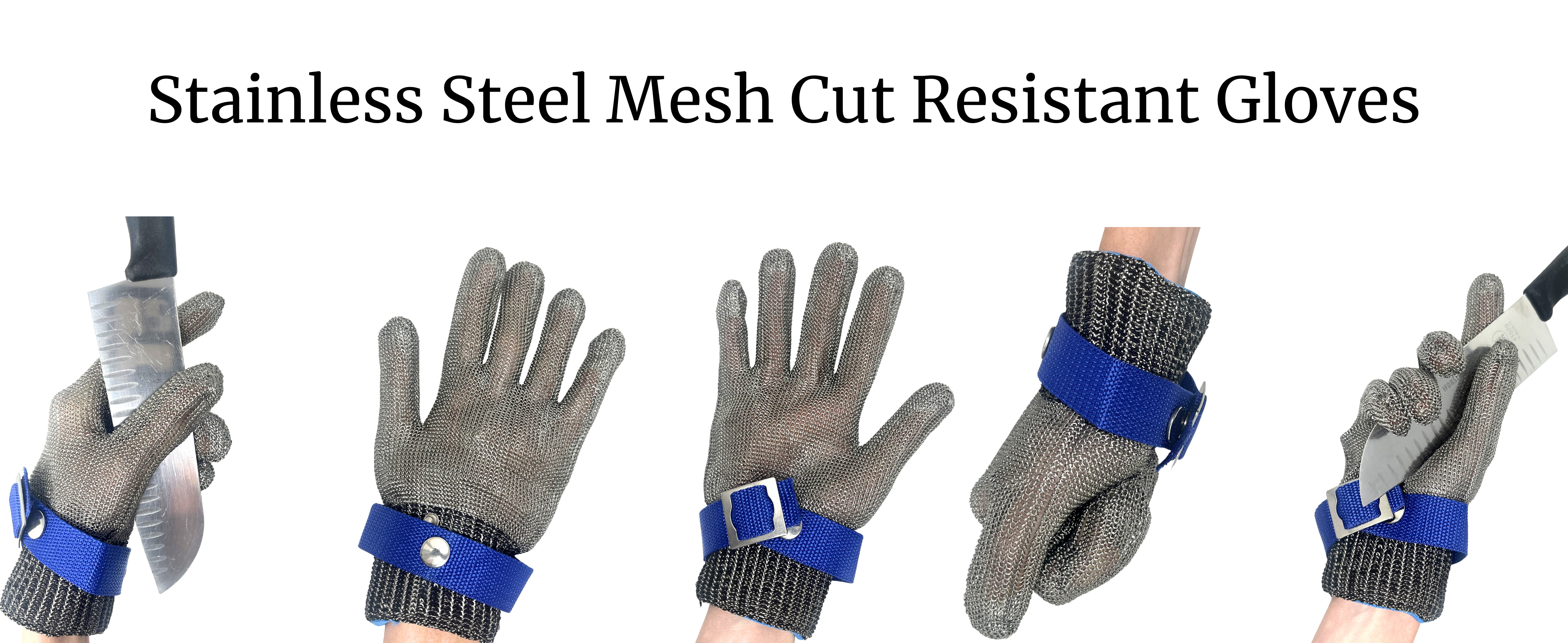
Cut-resistant gloves are essential safety equipment in any environment where knives, boning tools, and meat saws are in regular use. A cut-resistant glove worn on the non-knife hand dramatically reduces the risk of accidental cuts during deboning, trimming, and slicing — tasks where the guiding hand is in close proximity to the blade. CutleryMania carries stainless steel mesh gloves and cotton glove liners to cover both the protection and comfort requirements of professional butcher work.
Stainless Steel Knit Mesh Glove — Food Grade
The stainless steel knit mesh glove is the industry standard for cut protection in commercial butcher shops and professional kitchens. The interlocking metal mesh construction provides high cut resistance while remaining flexible and breathable enough for extended use during deboning, trimming, and knife-heavy cutting tasks. The food-grade stainless steel material is safe for direct contact with meat and can be washed and sanitized for continued hygienic use. This glove is the right choice for boning, trimming, and any task where the guiding hand is in close proximity to a sharp blade.
Cotton Glove Liners — 12 Pair Pack (Size 9 Large)
Cotton glove liners are worn underneath stainless steel mesh or chain gloves to improve comfort during long shifts. The cotton material absorbs moisture and reduces the irritation and skin discomfort that metal gloves can cause during extended wear, particularly in cold or wet processing environments. For butchers and meat processors who wear cut-resistant gloves throughout the day, cotton liners significantly improve wearing comfort and help hands stay drier. The 12-pair pack provides a practical supply for regular rotation and replacement.
Scrapers & Cleaning Tools — Workstation Hygiene
Bench Scraper — Plastic Handle, 2 Pack
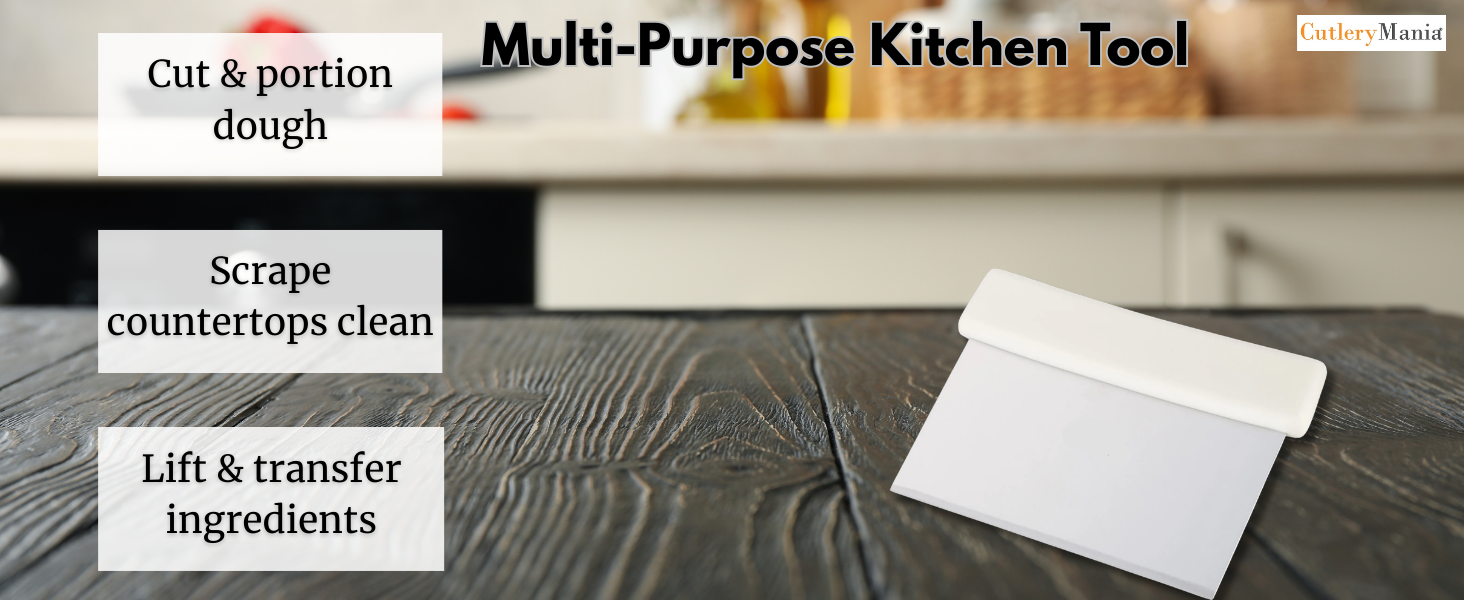
A bench scraper is a flat-bladed tool used to clean cutting tables, move chopped meat and fat trimmings, and maintain a clean and sanitary work surface during active meat processing. The plastic handle provides a secure, comfortable grip during scraping, and the straight blade edge efficiently clears debris from flat surfaces without scratching or damaging cutting boards and stainless steel tables. Bench scrapers are easy to sanitize and are a standard workstation tool in any commercial meat prep environment. The 2-pack ensures a spare is always available during production without stopping to wash.
Plastic Bone Duster — 4 Pack
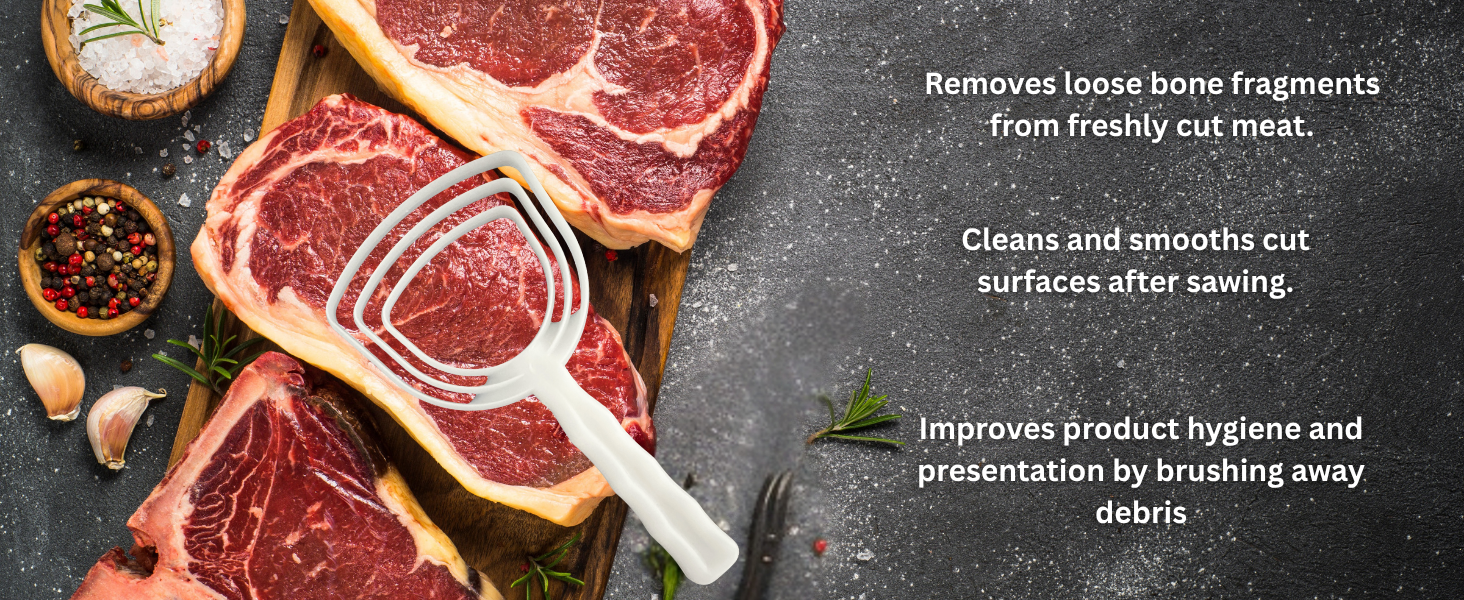
A bone duster is used to brush away bone fragments and bone dust from the cut surface of meat after band saw or hand saw cutting. Bone dust is a byproduct of sawing through bone and accumulates on the cut surface of the meat — removing it before the product is packaged or displayed improves both cleanliness and presentation quality. In a USDA-inspected processing facility, removing bone dust is also a sanitation practice that reduces contamination risk. The plastic bone duster is lightweight and easy to use, and the 4-pack provides adequate supply for regular rotation in a busy butcher shop or processing operation.
Quick Butcher Supplies Selection Guide
| Operation Type | Recommended Supplies |
|---|---|
| Small retail butcher shop | 19" hand saw, mesh glove, honing steel, bench scraper, S hooks |
| Medium commercial operation | 19" + 25" saw, diamond sharpening rod, T-hook, bone duster |
| High-volume / slaughterhouse | 25" hand saw, hinged double hooks, bulk blade refills, bone duster |
| Long-shift knife work (deboning, trimming) | Mesh glove + cotton liners |
| Walk-in cooler storage and aging | S hooks |
Frequently Asked Questions — Butcher Supplies
What is a hand meat saw used for?
A hand meat saw is used to cut through bone and divide large meat sections into smaller retail cuts. It is used for breaking down primals, portioning bone-in cuts, and handling manual cutting tasks in butcher shops and meat processing environments. The 19 inch saw is best for general retail use; the 25 inch saw is better for large carcasses and heavy bone cutting.
What size hand meat saw should I choose?
The 19 inch hand saw is the right choice for most retail butcher shop cutting — it provides better control and less fatigue for standard primal and sub-primal breakdown. The 25 inch saw is better for large carcasses, beef quarters, and high-volume production environments where the longer blade stroke produces faster, more efficient cuts through thick bone sections.
What is the difference between a mesh glove and a chain glove?
Stainless steel mesh gloves are constructed from interlocking metal rings knitted into a flexible fabric-like structure, making them comfortable and breathable for extended knife work like deboning and trimming. Chain gloves are made from heavier interlocking metal rings and provide more rigid, heavy-duty protection for high-risk or high-force cutting environments. For most butcher shop knife work, mesh gloves are the practical standard choice.
Why wear cotton glove liners under steel gloves?
Cotton glove liners improve comfort during long shifts by absorbing moisture, reducing skin irritation from the metal mesh, and helping hands stay drier in cold or wet processing environments. For butchers who wear cut-resistant gloves throughout the day, cotton liners significantly improve wearing comfort and are considered standard equipment in professional butcher operations.
What is a bone duster used for?
A bone duster is used to brush away bone dust and bone fragments from the cut surface of meat after band saw or hand saw cutting. Removing bone dust improves product cleanliness and presentation quality, and is a sanitation practice in USDA-inspected facilities. It is used after any saw cut that goes through bone.
What is a T-shaped meat hook used for?
A T-shaped meat hook is a handling hook held in the hand to grip, pull, and position large cuts of meat during cutting and processing. Unlike hanging hooks, it is used to maneuver meat safely while the other hand holds a knife, reducing direct hand contact with the product during cutting and improving both safety and hygiene. Available in 4-inch and 5-inch hook lengths.
What is the difference between a T-shaped hook and an S hook?
A T-shaped hook is a handling hook with a grip handle, held in the hand to maneuver meat during cutting and processing. An S hook is a hanging hook placed over a rail or rod to suspend meat in a cooler, aging room, or smokehouse. They serve completely different purposes — one is for active handling, the other for storage and hanging.
How often should hand saw blades be replaced?
Replace hand saw blades when cutting becomes noticeably slower, rougher, or requires more force than usual — these are signs the blade teeth are dull. In a busy commercial butcher shop, blades may need replacement weekly or more frequently depending on cutting volume and the density of bone being cut. The 12-pack blade refill ensures replacement blades are always on hand without interrupting production.
What is the difference between a honing steel and a diamond sharpening rod?
A honing steel realigns the existing blade edge without removing significant steel — it is used daily before and during cutting shifts to maintain edge alignment. A diamond sharpening rod removes a small amount of steel with each stroke to restore a genuinely dull edge that honing alone can no longer fix. Use the honing steel frequently for maintenance; use the diamond rod when the knife needs actual edge restoration.
Shop Butcher Supplies
CutleryMania carries a complete range of professional butcher supplies for commercial butcher shops, meat processing facilities, and home processing.
- 19" Stainless Steel Hand Meat Saw — Standard retail butcher shop use
- 25" Stainless Steel Hand Meat Saw — Large carcasses and heavy bone cutting
- Hand Saw Refill Blades — 12 Pack — Replacement blades for hand meat saws
- S Hook — 4 Pack — Rail hanging for coolers, aging rooms, smokehouses
- Hinged Double Meat Hook — 4 Pack — Heavy carcass hanging and processing lines
- T-Shaped Meat Hook — Orange Handle, 2 Pack — Manual meat handling during cutting
- Stainless Steel Mesh Cut-Resistant Glove — Food-grade hand protection for knife work
- Cotton Glove Liners — 12 Pair Pack — Comfort liners for under steel gloves
- Bench Scraper — 2 Pack — Cutting table cleaning and workstation hygiene
- Plastic Bone Duster — 4 Pack — Bone dust removal after saw cutting
- Butcher's Honing Steel (12" & 14") — Daily knife edge maintenance
- 12" Diamond Coated Sharpening Rod — Mid-shift edge restoration
Questions about which supplies are right for your operation? Call or text CutleryMania at (973) 287-6535 or email sales@cutlerymania.com. We respond within one hour during business hours.
There are no products listed under this category.